
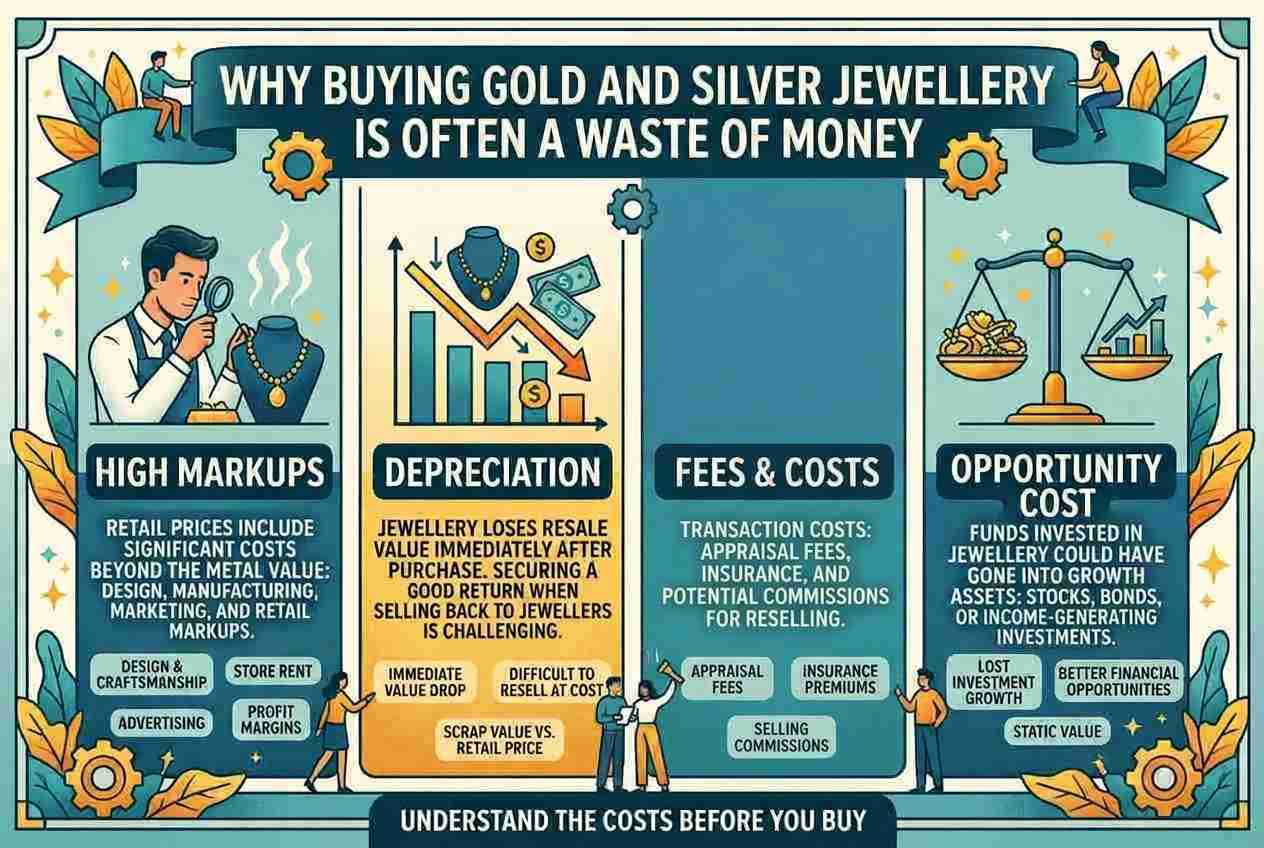
22 June 2026 – Gold and silver have served as stores of value for thousands of years. However, there is a significant difference between investing in precious metals and purchasing gold or silver jewellery. While jewellery can be beautiful, fashionable, and emotionally meaningful, it is generally one of the least efficient ways to own precious metals. For individuals whose primary goal is wealth preservation or investment, buying gold and silver jewellery is often a costly mistake.
The Hidden Cost of Jewellery
When purchasing gold or silver jewellery, buyers are not simply paying for the precious metal content. A large portion of the purchase price consists of manufacturing costs, craftsmanship, branding, retail markups, marketing expenses, and sometimes gemstone settings.t gains or losses within a single trading session.
For example, a gold necklace containing $1,000 worth of gold may retail for $1,500 to $2,500 or even more. The additional premium reflects the jeweller’s costs and profit margins rather than the intrinsic value of the gold itself.
Unlike investment-grade bullion products, which are priced close to the spot value of the metal, jewellery often carries premiums ranging from 30% to over 200% above its precious metal content.
Low Resale Value
One of the biggest disadvantages of jewellery is its poor resale value.
Many first-time buyers assume that because gold prices generally rise over time, their jewellery will appreciate accordingly. Unfortunately, this is rarely the case. When selling jewellery, buyers quickly discover that jewellers and gold dealers typically pay only for the metal content, not the original retail price.
The craftsmanship premium, retail markup, and branding value that were paid during purchase are usually lost forever.
For example, a gold bracelet purchased for $2,000 may contain only $1,100 worth of gold. When selling, a dealer may offer close to the melt value of the gold, resulting in a substantial loss despite stable or rising gold prices.
The situation is often even worse for silver jewellery because silver prices are significantly lower relative to manufacturing costs. As a result, silver jewellery can lose a very large percentage of its original purchase value immediately after leaving the store.
Jewellery Is Often Treated as Scrap
When jewellery is sold back into the market, it is frequently classified as scrap gold or scrap silver.
Dealers typically evaluate jewellery based on weight and purity rather than design. Unless the piece comes from a highly sought-after luxury brand or has significant collectible value, it is usually destined to be melted down and refined.
This means that a beautifully crafted ring or necklace may ultimately be valued only for its metal content. The artistic and manufacturing costs paid by the original buyer add little or no value during resale.
As a result, jewellery owners often experience a significant gap between what they paid and what they can recover when selling.
Purity Issues
Another challenge with jewellery is that it is often not made from pure precious metals.
Most gold jewellery is manufactured using 18-karat, 14-karat, or even 9-karat gold. These alloys contain substantial amounts of other metals such as copper, silver, nickel, or zinc.
Similarly, silver jewellery is commonly made from sterling silver, which contains 92.5% silver and 7.5% other metals.
Because jewellery is not typically pure metal, owners receive less precious metal exposure per dollar spent compared to investment-grade bullion products such as gold bars, silver bars, or bullion coins.
Bullion Is a Better Alternative
Periods of extreme price swings require patience and disciplined investing.
For investors seeking to preserve wealth, physical bullion generally offers a far more efficient solution.
Investment-grade gold and silver bars are produced with high purity levels and are sold at relatively low premiums above spot prices. They are also widely recognized and easier to sell through bullion dealers worldwide.
Unlike jewellery, bullion products are purchased primarily for their metal value rather than fashion appeal. As a result, investors retain a much larger percentage of their capital when buying and selling.
A one-ounce gold bar or silver bar may be bought and sold with relatively narrow spreads, making bullion a more practical vehicle for long-term precious metal ownership.
Conclusion
Gold and silver jewellery may sparkle beautifully, but it is usually a poor investment. High retail markups, substantial manufacturing premiums, low resale values, and scrap-metal treatment upon resale make jewellery one of the least efficient ways to own precious metals.
For those looking to protect wealth, hedge against inflation, or gain exposure to precious metals, investment-grade bullion bars and coins are generally superior choices.
Disclaimer: All content is provided for informational and educational purposes only. Precious metals investments involve financial risk. Readers should conduct their own research before making any investment decisions.
