
Gold and silver investors have experienced an extraordinary roller-coaster. Prices surged to remarkable highs before retreating sharply, providing an important reminder that precious metals can be highly volatile.

As we head into October 2026, the question is: how should investors approach gold and silver from here?
Beyond price forecasts, investors should consider the current retail investment climate, the realities of buying physical bullion, and perhaps most importantly, the role of discipline when greed, hype and fear of missing out begin influencing investment decisions.
A Reminder of How Volatile Gold and Silver Can Be
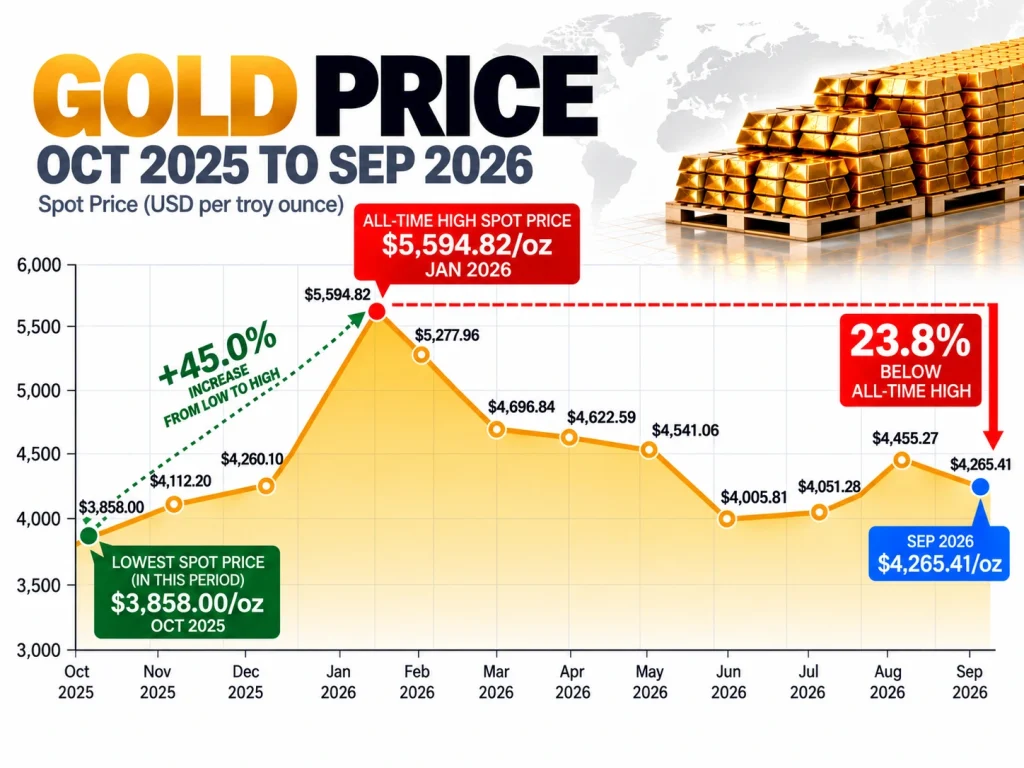
Gold began October 2025 at around US$3,858 per ounce and climbed strongly over the following months. By January 2026, it had reached an all-time high of approximately US$5,595—around 45% above its October low.
The rally did not last. Gold subsequently declined, reaching around US$4,006 in June before recovering during July and August. By 25 September 2026, it was trading around US$4,265, approximately 24% below its January peak.
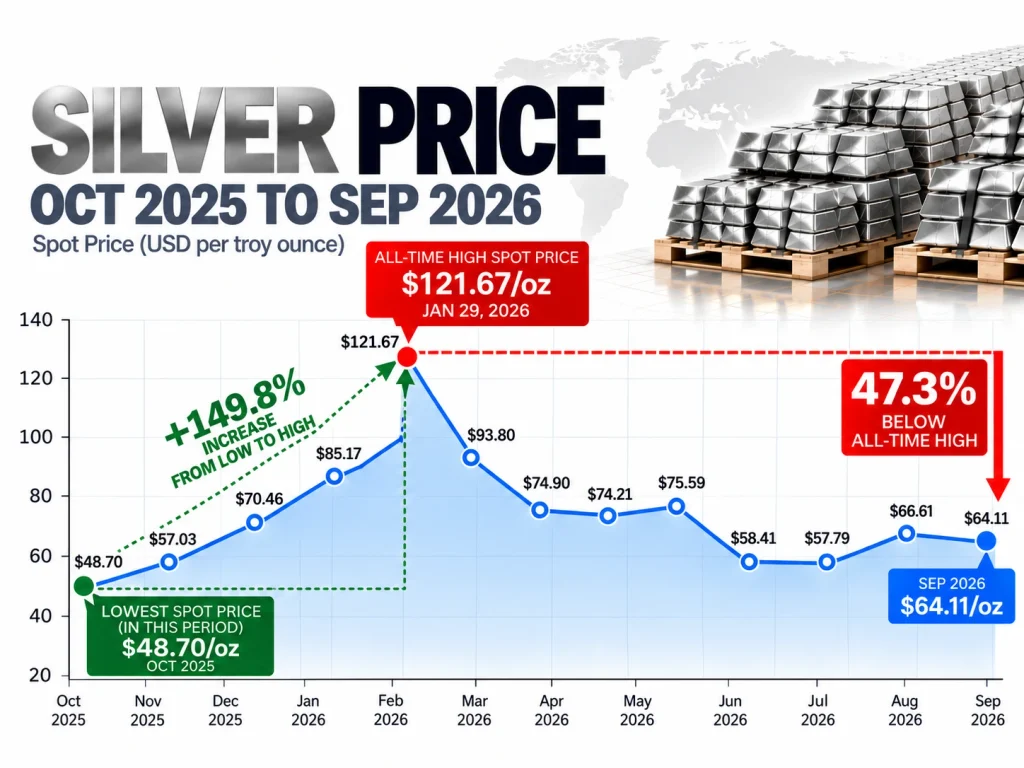
Silver experienced even greater volatility. From around US$49 per ounce in October 2025, silver surged to an intramonth record of approximately US$122 in January 2026—almost 150% above its October level.
Prices subsequently fell sharply, reaching around US$58 by June and July. By 25 September, silver stood near US$64, roughly 47% below its January peak.
These dramatic movements demonstrate that even during a strong longer-term precious metals market, substantial corrections can occur.
When Greed and Hype Turn Into FOMO
As prices accelerated, retail interest expanded rapidly. Investors from almost every walk of life entered the market, attracted not only by gold and silver themselves but also by the possibility of making quick profits.
At the same time, mainstream and social media were filled with increasingly dramatic predictions. Forecasts of silver reaching US$300, US$500 or even US$1,000 per ounce circulated alongside predictions of gold exceeding US$10,000. Stories of critical physical shortages and possible failures to meet physical delivery obligations also attracted considerable attention.
Whether credible or not, such stories spread quickly. As prices continued climbing, they reinforced the belief that prices could only go higher.
Greed and excitement gradually developed into FOMO—the fear of missing out.
Some investors moved beyond physical bullion into gold and silver savings schemes, ETFs, mining shares and other forms of exposure. When prices subsequently fell, sentiment changed remarkably quickly.
Discipline Matters
This experience highlights perhaps one of the most important principles of investing: discipline.
Investors can study charts, analyse supply and demand and conduct extensive research. But all that work may have limited value if emotions take control whenever prices begin moving rapidly.
History repeatedly demonstrates how difficult controlling those emotions can be. Ponzi schemes, for example, have existed for more than a century. Most people understand that unusually high returns accompanied by little apparent risk should raise warning signs. Yet people continue to fall for them.
Gold and silver investing is obviously very different, but the behavioural lesson remains relevant: when potential profits appear sufficiently attractive, greed can sometimes overpower common sense.
Knowing the lesson is easy. Applying it when everyone around you appears to be making money is considerably harder.
Physical Demand Is Only Part of the Market
Investors should also understand how global gold and silver prices are determined.
Short- and near-term price movements are heavily influenced by financial-market activity, including futures trading, ETF flows and high-frequency electronic trading. Prices are therefore not determined simply by how many people are lining up outside bullion shops to purchase physical metal.
A long queue at a bullion dealer may indicate strong local retail demand, but it does not necessarily tell us where the international gold or silver price is heading next.
This distinction is particularly important for investors buying physical bullion for long-term wealth preservation rather than short-term speculation.
Physical Bullion in a Modern Financial World
One thing, however, has remained remarkably consistent. Gold and silver have served as stores of wealth for thousands of years.
From ancient civilisations to the modern era, physical gold and silver have been used as money and as a means of preserving wealth. Our monetary system is very different today, but gold continues to play an important role in central-bank reserves around the world.
For individual investors, physical bullion offers something relatively straightforward: direct ownership of a tangible asset, without depending on an ETF, fund or another financial product.
That does not mean physical bullion is risk-free. Prices can fall significantly, while premiums, buy-sell spreads, storage and liquidity must also be considered.
Ignore the Noise and Understand Why You Invest
Today’s financial markets are becoming faster and increasingly complex. Algorithmic trading, high-frequency electronic trading and sophisticated technology can contribute to rapid market movements.
Social media adds another dimension. Hype, sensational headlines, unrealistic price predictions, misinformation and fake news can spread globally within minutes. When markets are rising rapidly, these narratives can fuel greed and FOMO.
Against this backdrop, slowly accumulating physical gold and silver for long-term wealth preservation may appear old-fashioned—or even boring.
But physical bullion should not be viewed as a get-rich-quick investment.
Prices will rise and fall, sometimes dramatically. Navigating these markets requires discipline, common sense, careful research and the ability to separate facts from noise. There are no guaranteed returns and no shortcuts.
Sometimes successful investing is not about chasing the next big thing. It is about understanding what you own, thinking independently, ignoring the hype and staying focused on why you invested in physical gold and silver in the first place.
Disclaimer: All content is provided for informational and educational purposes only. Precious metals investments involve financial risk. Readers should conduct their own research before making any investment decisions.
