
China has stepped up its gold purchases, with the People’s Bank of China (PBoC) adding 21 tonnes of gold to its official reserves in September 2026. This represents the central bank’s largest monthly acquisition in three years and highlights China’s continued interest in strengthening its gold holdings.
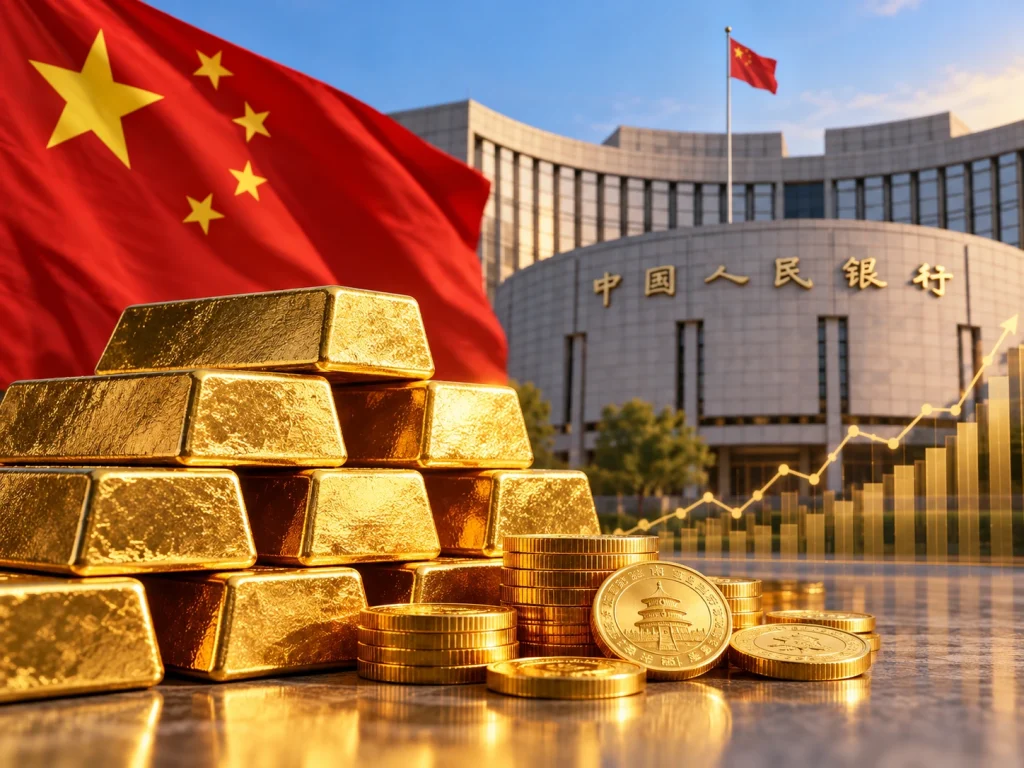
The latest purchase comes at a time when global financial markets are facing uncertainty over interest rates, geopolitical developments, and the direction of the U.S. dollar. While gold prices have experienced considerable volatility, China’s continued accumulation suggests that the precious metal remains an important part of its long-term reserve strategy.
China’s Gold Buying Accelerates
September’s purchase marks a notable increase in China’s gold-buying activity. The central bank acquired approximately 18.5 tonnes in August and 18 tonnes in July, before increasing its purchases to 21 tonnes in September.
The latest addition brings China’s official gold reserves to approximately 2,196 tonnes and extends its buying streak to 23 consecutive months.
Although China already holds one of the world’s largest gold reserves, its continued purchases suggest that Beijing sees value in gradually increasing the proportion of gold within its overall reserve portfolio.
Unlike private investors, central banks generally do not purchase gold with the intention of making short-term trading profits. Their decisions are often guided by broader considerations, including reserve diversification, financial stability, and long-term economic security.
Why Is China Buying More Gold?
One of the main reasons behind China’s gold accumulation is the desire to diversify its foreign exchange reserves.
China holds substantial reserves in foreign currencies and financial assets, particularly those denominated in U.S. dollars. While these assets provide liquidity and investment income, their values can be affected by changes in interest rates, exchange rates, and international financial conditions.
Gold offers a different set of characteristics.
Unlike bonds or bank deposits, physical gold does not depend on another institution’s ability to repay its obligations. It is also internationally recognised and can be held independently of the financial system of any particular country.
By increasing its gold holdings, China can reduce its reliance on any single currency or financial asset.
Geopolitical considerations may also play a role. As economic relationships between major countries become increasingly complicated, central banks may place greater importance on holding reserve assets that are less exposed to foreign financial systems.
However, China’s purchases should not necessarily be interpreted as an immediate attempt to replace the U.S. dollar. Reserve diversification is generally a gradual process that takes place over many years.
Central Bank Demand Remains Important
China’s buying activity is part of a wider trend among central banks seeking to increase their gold reserves.
Countries such as Poland and Uzbekistan have also been active purchasers, reflecting continued interest in gold as a strategic reserve asset.
Central banks have become an increasingly important source of physical gold demand in recent years. Their purchases can remove substantial quantities of bullion from the available market, particularly when the gold is intended to be held for extended periods.
Unlike investment funds, which may rapidly increase or reduce their exposure depending on market conditions, central banks often adopt a longer-term approach.
This can provide a relatively stable source of demand for the gold market.
Nevertheless, central bank buying is only one factor influencing gold prices. Investment demand, jewellery consumption, exchange-traded funds, and futures market activity also play important roles in determining price movements.
China’s Foreign Exchange Reserves Decline
China’s increased gold purchases coincided with a decline in its foreign exchange reserves during September.
The country’s foreign exchange reserves fell by approximately US$38.1 billion to around US$3.4 trillion, partly reflecting changes in currency exchange rates and the valuation of overseas financial assets.
A stronger U.S. dollar can affect the reported value of reserves held in other currencies, while changes in bond prices can also influence overall reserve valuations.
This illustrates why diversification remains important for central banks managing large portfolios of international assets.
Although gold prices can also fluctuate, holding a combination of currencies, securities, and precious metals can help spread financial risks across different asset classes.
What Does This Mean for Gold Investors?
China’s continued gold accumulation is generally viewed as a positive long-term development for the precious metals market.
Sustained purchases by major central banks may help support physical demand, particularly during periods when private investment interest weakens.
However, investors should not assume that central bank buying will automatically lead to higher gold prices.
Gold remains sensitive to U.S. monetary policy, Treasury yields, inflation expectations, and movements in the U.S. dollar. Higher bond yields, for example, can make interest-bearing investments more attractive relative to gold.
Consequently, gold prices may continue to experience sharp corrections even when central banks are actively accumulating bullion.
For investors, the distinction between long-term demand and short-term price movements remains important.
Conclusion
China’s purchase of 21 tonnes of gold in September 2026 reinforces the growing importance of gold in central bank reserve management.
The acceleration in purchases suggests that China remains committed to building its gold holdings despite fluctuations in international precious metals prices.
While the immediate impact on gold prices may be limited, sustained central bank demand could remain an important influence on the market over the longer term.
For investors, China’s actions serve as a reminder that gold is not merely a speculative investment. It also remains an internationally recognised reserve asset used by central banks to diversify holdings and manage long-term financial risks.
Disclaimer: All content is provided for informational and educational purposes only. Precious metals investments involve financial risk. Readers should conduct their own research before making any investment decisions.
