
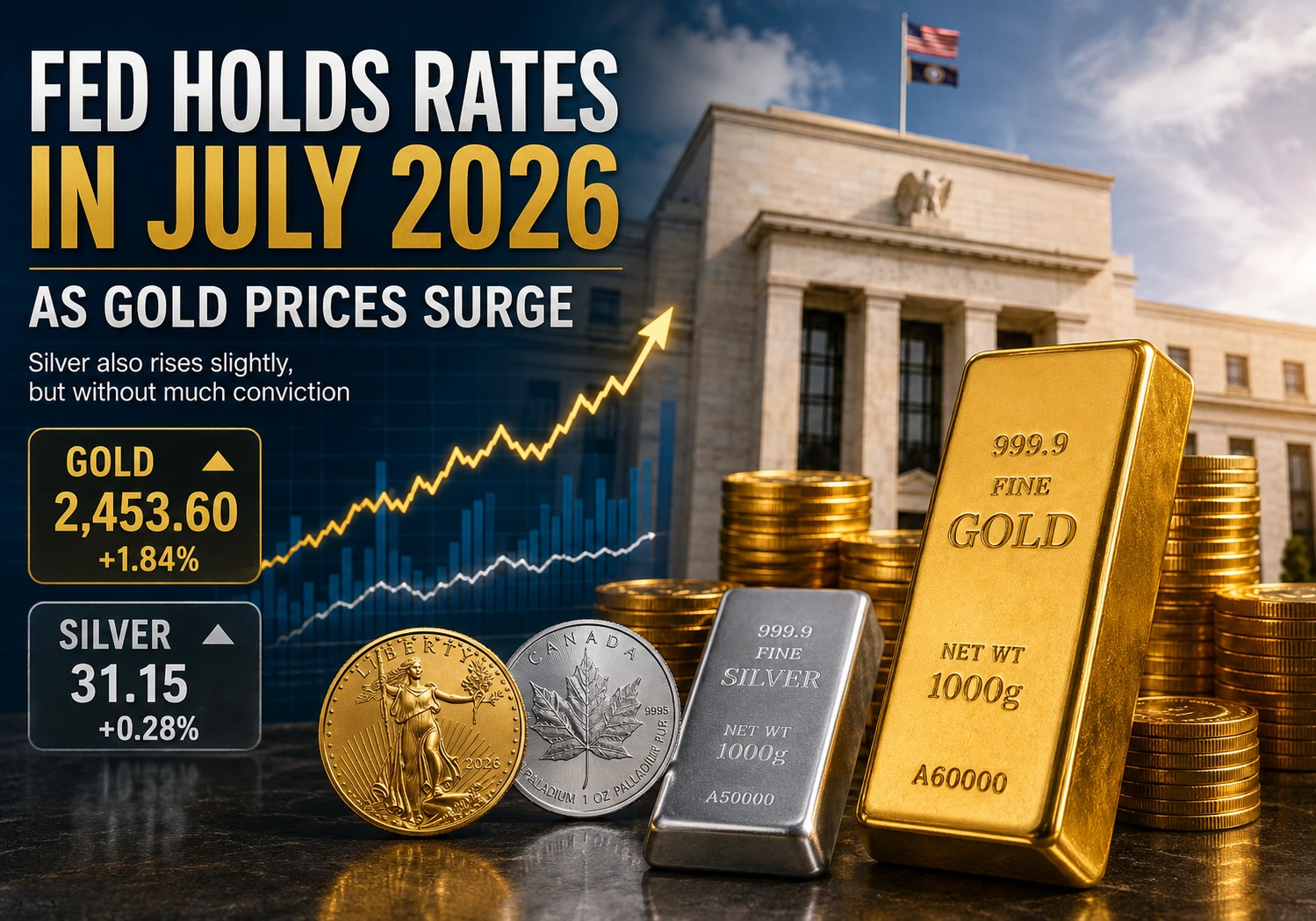
2 August 2026 – The U.S. Federal Reserve left interest rates unchanged at its July 2026 meeting, a decision that was widely expected by financial markets. While the central bank acknowledged that inflation has moderated compared to previous years, policymakers remained cautious about declaring victory. Persistent concerns over tariffs, supply chain disruptions, and geopolitical instability continue to cloud the economic outlook.
Following the Fed’s announcement, gold prices climbed sharply, reflecting investors’ growing demand for safe-haven assets. Silver also edged higher, but its gains lacked the same level of conviction seen in gold. This divergence suggests that while investors were actively seeking the safety of gold, they remained more cautious about silver, which is influenced not only by investment demand but also by industrial activity.
Why the Federal Reserve Kept Rates Unchanged
The Federal Reserve’s primary objectives are to maintain price stability and support maximum employment. Although inflation has eased from its peak, it remains above the Fed’s long-term target. Rather than rushing into rate cuts or introducing further hikes, policymakers chose to wait for additional economic data before making their next move.
Keeping interest rates unchanged allows the Fed to assess whether inflation will continue to decline naturally or whether underlying price pressures will re-emerge. The central bank also remains mindful that monetary policy works with a time lag, meaning previous rate increases are still filtering through the economy.
For investors, the July decision signals that the Fed remains cautious. Financial markets are now closely watching upcoming inflation reports, employment data, and consumer spending figures for clues about future policy.
Why Gold Prices Rose
Normally, higher interest rates can weigh on gold because the metal does not generate interest or dividends. However, when the Federal Reserve pauses rate increases amid lingering uncertainty, gold often benefits.
Several factors contributed to gold’s strong performance after the July meeting.
First, investors interpreted the Fed’s cautious tone as a sign that economic risks remain elevated. Concerns over slowing economic growth encourage investors to diversify into assets that have historically preserved wealth during uncertain periods.
Second, geopolitical tensions continue to support demand for safe-haven investments. Ongoing conflicts and diplomatic uncertainties have increased market volatility, making gold an attractive store of value.
Third, expectations that future rate cuts may eventually occur also provide support for gold prices. If borrowing costs decline in the future, the opportunity cost of holding gold becomes lower, making the precious metal more attractive.
Silver benefited from many of these same factors, but the buying momentum was noticeably weaker. Unlike gold, silver has substantial industrial applications in sectors such as electronics, solar energy, and manufacturing. As investors continue to assess the outlook for global economic growth, silver has yet to attract the same level of safe-haven demand as gold.
Inflation Still Matters
Although inflation has slowed compared to previous years, several factors continue to pose risks.
Higher import tariffs can increase the cost of goods for businesses and consumers. Supply chain disruptions caused by international conflicts may also keep production costs elevated. Rising energy prices, labour shortages, and government spending can further contribute to inflationary pressures.
These risks explain why the Federal Reserve remains cautious. Cutting rates too early could reignite inflation, while raising rates again could slow economic growth more than desired.
For investors, this uncertain balance supports continued interest in precious metals as part of a diversified investment portfolio.
Gold’s Role During Economic Uncertainty
Gold has long been regarded as a store of value during periods of financial uncertainty. Unlike paper currencies, gold cannot be printed by central banks, making it an attractive hedge against inflation and currency depreciation.
While no investment is guaranteed to rise, gold has demonstrated resilience across multiple economic cycles. Its relatively low correlation with stocks and bonds also makes it useful for portfolio diversification.
What Investors Should Watch Next
Although the Fed kept rates unchanged in July, future policy decisions remain data-dependent. Investors should monitor several key indicators in the coming months.
- Inflation reports, particularly the Consumer Price Index (CPI)
- U.S. employment and wage growth
- Consumer spending and retail sales
- Economic growth data
- Developments in global trade and geopolitical tensions
Any significant changes in these areas could influence the Fed’s next policy decision and, consequently, the direction of gold and silver prices.
Conclusion
The Federal Reserve’s decision to hold interest rates steady in July 2026 reflects an economy that continues to face both progress and uncertainty. Inflation has eased but remains a concern, while geopolitical tensions and trade-related risks continue to influence global markets.
Gold’s strong rally following the Fed’s announcement highlights its enduring role as a safe-haven asset. Silver also moved higher, but its more subdued performance indicates that investors remain cautious about the broader economic outlook and industrial demand.
Whether interest rates remain unchanged, begin to fall, or rise again, precious metals are likely to remain closely tied to expectations surrounding inflation, monetary policy, and global economic stability. For long-term investors, understanding these relationships can help inform more balanced and resilient investment decisions.
The data and analysis presented in this article are compiled from official sources and industry organizations. For more information, please refer to our Sources and References page.
Disclaimer: All content is provided for informational and educational purposes only. Precious metals investments involve financial risk. Readers should conduct their own research before making any investment decisions.
