
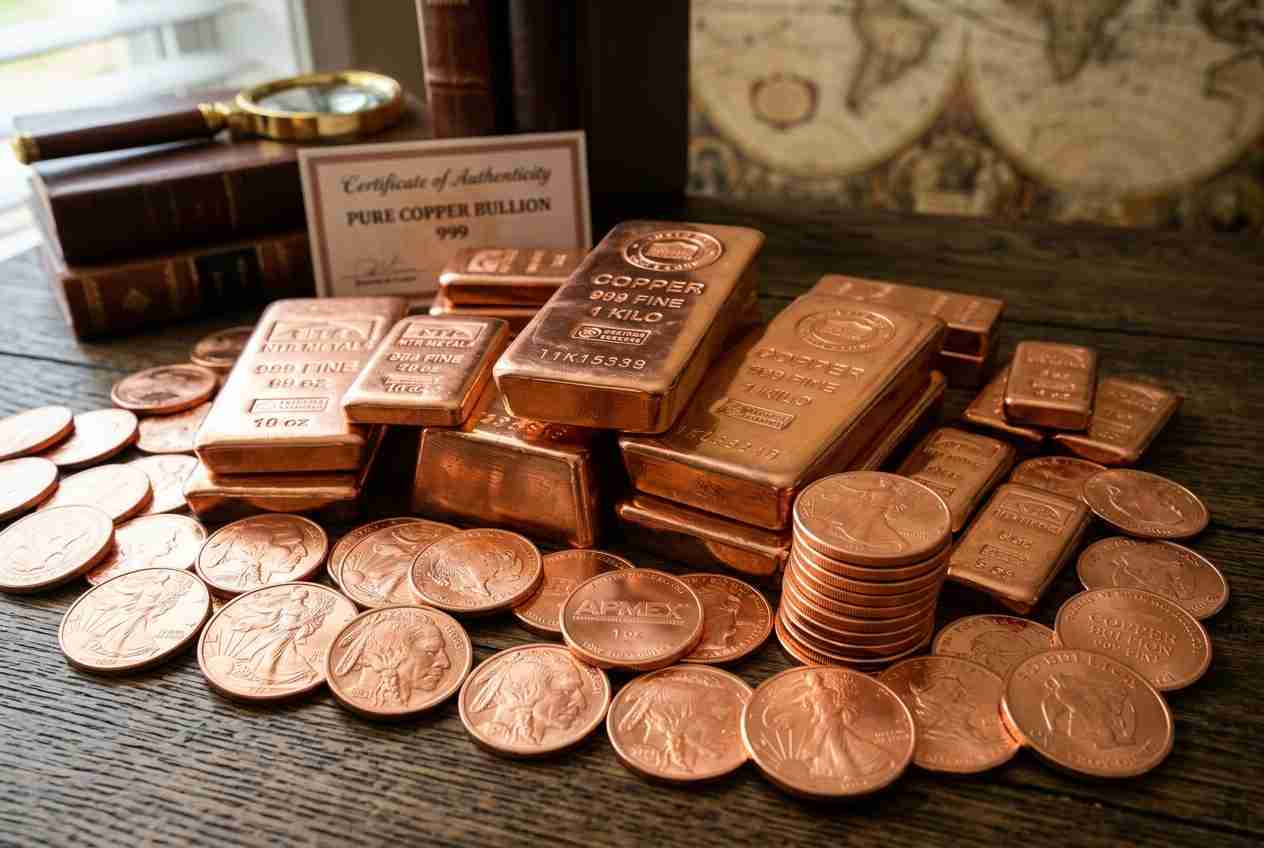
13 June 2026 – Copper has attracted increasing attention from investors in recent years. Rising demand from electric vehicles, renewable energy infrastructure, data centers, and global electrification projects has led some market commentators to describe copper as “the new oil.” As a result, a growing number of dealers have begun offering copper bullion bars and rounds to retail investors.
While the long-term outlook for industrial copper demand may appear promising, copper bullion itself is generally not worth investing in for most investors. The economics of copper bullion ownership differ significantly from those of gold and silver, making it a less efficient vehicle for wealth preservation or investment growth.
The Problem of Low Value Density
One of the biggest disadvantages of copper bullion is its low value density. Copper is far less valuable per ounce than gold or silver.
For example, a one-ounce gold coin may be worth several thousand dollars, while a one-ounce silver coin may be worth tens of dollars. In contrast, a one-ounce copper round typically contains only a few cents’ worth of copper.
This means investors must purchase and store very large quantities of copper to achieve meaningful exposure. A modest investment of several thousand dollars in copper bullion can require dozens of kilograms of metal, creating storage and handling challenges that do not exist with precious metals.
High Premiums Destroy Investment Returns
Another major drawback is the extremely high premium charged on copper bullion products.
Many copper rounds and bars are sold at premiums that are several hundred percent above the actual value of the copper they contain. A copper round containing less than one dollar worth of metal may retail for several dollars due to manufacturing, packaging, distribution, and marketing costs.
As a result, investors start at a significant loss the moment they make a purchase. Even if copper prices rise substantially, the increase may not be enough to overcome the large premium initially paid. This makes it difficult for copper bullion investors to generate attractive returns.
Copper Is Primarily an Industrial Metal
Unlike gold, which is widely regarded as a monetary asset and store of value, copper is primarily an industrial commodity.
Copper prices are heavily influenced by manufacturing activity, construction demand, infrastructure spending, and economic growth. During economic slowdowns, recessions, or industrial contractions, copper demand can weaken significantly. This creates greater price volatility and economic sensitivity than many investors realize.
Gold often performs well during periods of financial uncertainty because investors seek safe-haven assets. Copper generally does not enjoy the same status. Instead, it tends to move in line with expectations for global economic growth.
Storage Costs Can Become Significant
Physical copper requires considerably more storage space than precious metals of equivalent value. An investor seeking to hold $10,000 worth of gold can do so in a small safe. Holding the same value in copper bullion would require an impractically large amount of metal.
The bulk and weight of copper increase transportation, storage, and insurance costs. These additional expenses further reduce the attractiveness of copper bullion as a long-term investment. For investors who value portability and wealth preservation, gold and even silver offer much greater efficiency.
Limited Liquidity in the Retail Market
Copper bullion products also suffer from relatively limited liquidity. Many bullion dealers may not actively buy back copper rounds or bars, and those that do often offer prices significantly below the original purchase cost. The spread between buying and selling prices can therefore be substantial, making it difficult for investors to recover their initial investment.
Gold and silver bullion enjoy globally recognized markets with established dealer networks, strong investor demand, and transparent pricing. Selling gold or silver bullion is generally straightforward.
Better Ways to Gain Exposure to Copper
Investors who believe in the long-term growth story of copper may find more efficient alternatives than physical copper bullion. Copper mining companies, copper-focused exchange-traded funds (ETFs), and diversified resource companies can provide exposure to rising copper prices without the storage and premium issues associated with physical copper products.
These investment vehicles often offer better liquidity, lower transaction costs, and greater scalability for investors seeking copper exposure. While they come with their own risks, they generally represent a more practical approach than accumulating large quantities of physical copper bullion.
Conclusion
Copper plays a vital role in the global economy and is likely to remain essential for electrification, renewable energy, and technological development. However, a positive outlook for copper demand does not automatically make copper bullion a good investment.
Low value density, high retail premiums, storage challenges, limited liquidity, and the industrial nature of copper all reduce the investment appeal of physical copper bullion. In many cases, investors may be better served by owning gold bullion, silver bullion, or financial instruments linked to the copper market.
For most retail investors seeking wealth preservation or long-term investment returns, copper bullion is more of a novelty collectible than a serious investment asset.
Disclaimer: All content is provided for informational and educational purposes only. Precious metals investments involve financial risk. Readers should conduct their own research before making any investment decisions.
