
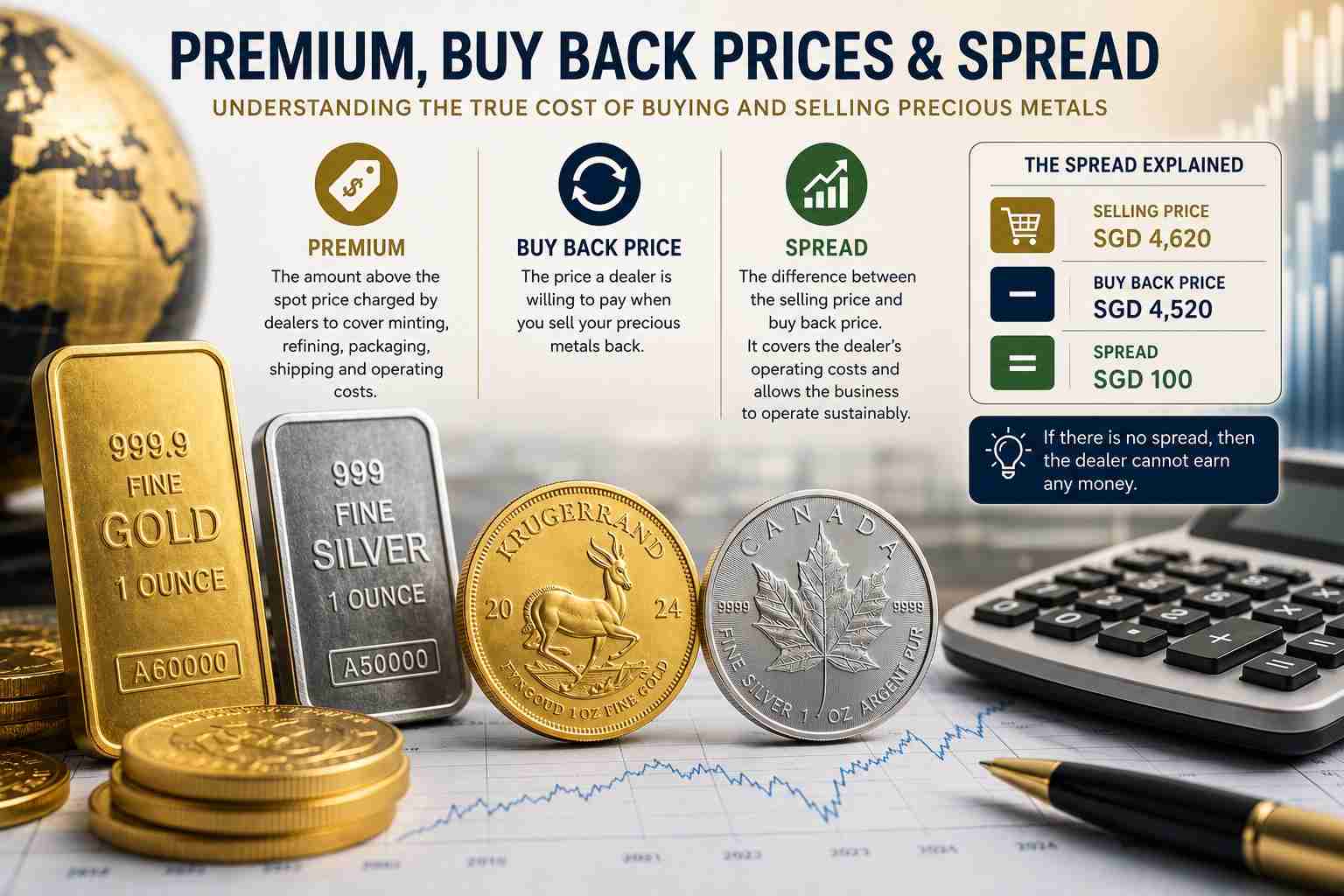
26 July 2026 – When investing in physical precious metals such as gold, silver, platinum, and palladium, many first-time buyers focus only on the spot price. While the spot price is an important benchmark, it is only one part of the equation. To make informed investment decisions, you should also understand three key concepts: premium, buy back price, and spread.
These factors directly affect the total cost of your investment and the amount you receive when you decide to sell.
What Is a Premium?
A premium is the amount charged above the international spot price of a precious metal. It represents the additional costs involved in producing and delivering a physical bullion product.
For example, if the spot price of gold is SGD 4,500 per ounce and a 1 oz gold bar sells for SGD 4,620, the premium is SGD 120.
The premium typically covers:
- Refining and minting costs
- Manufacturing of bars or coins
- Packaging and security features
- Shipping and insurance
- Dealer operating costs and profit margin
What Is a Buy Back Price?
A buy back price is the price a bullion dealer is willing to pay when purchasing precious metals from customers.
Contrary to popular belief, the buy back price is not always the same as the spot price. Dealers consider several factors before quoting a buy back price, including:
- Current market conditions
- Product condition
- Liquidity
- Customer demand
What Is the Spread?
The spread is the difference between the dealer’s selling price and the buy back price.
For example, if the the dealer is selling a gold bar at SGD5000 and buy back the exact bar at SGD4500, the spread is SGD500.
The spread covers the costs involved in operating a bullion business, including staffing, premises, security, insurance, compliance, payment processing, and other day-to-day operating expenses. If there were no spread between the buying and selling prices, a bullion dealer would not earn any revenue from trading precious metals, making it impossible to operate a sustainable business.
Several factors influence the spread, including:
- Type of precious metal
- Product size
- Market volatility
- Dealer pricing policy
- Supply and demand
Why These Three Factors Matter
Many investors compare dealers based solely on the selling price. However, the true cost of ownership involves both the purchase price and the eventual selling price.
A dealer offering a slightly lower premium may also quote a much lower buy back price, resulting in a wider spread. Conversely, a dealer with a marginally higher selling price may provide stronger buy back prices.
Final Thoughts
Understanding premium, buy back prices, and spread is essential for anyone investing in physical gold, silver, platinum, or palladium. While premiums determine how much you pay above the spot price, buy back prices determine how much you receive when selling. The difference between these two prices—the spread—allows bullion dealers to cover their operating costs and continue providing secure, transparent, and reliable trading services.
Before making a purchase, compare both the selling price and the buy back price rather than focusing on just one. Doing so will help you better understand the true cost of ownership and make more informed precious metals investment decisions.
The data and analysis presented in this article are compiled from official sources and industry organizations. For more information, please refer to our Sources and References page.
Disclaimer: All content is provided for informational and educational purposes only. Precious metals investments involve financial risk. Readers should conduct their own research before making any investment decisions.
