
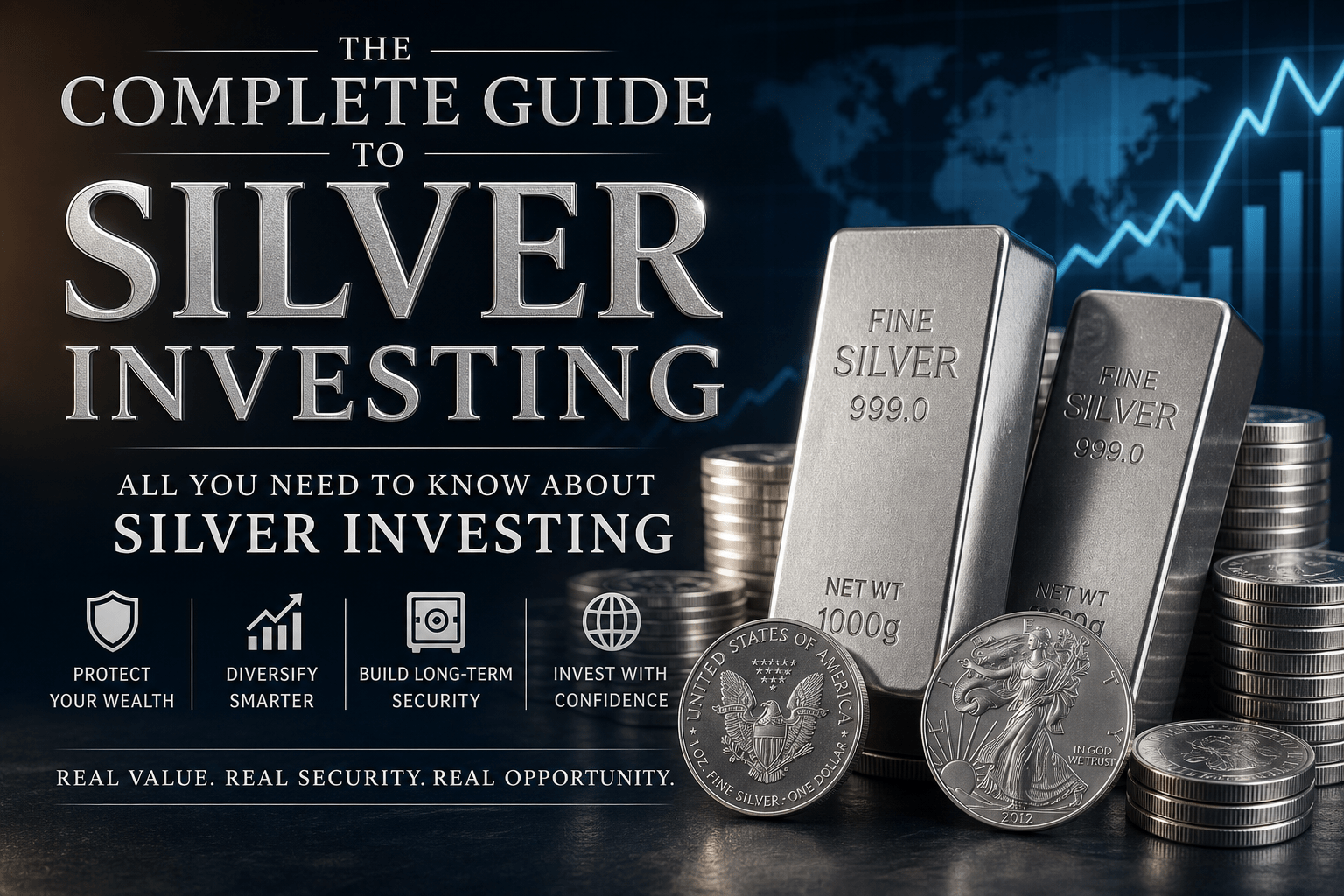
1.Introduction to Silver Investment
Silver has been valued for thousands of years as a precious metal, a form of money, and a store of wealth. While gold is often considered the ultimate safe-haven asset, silver has a unique position because it combines the characteristics of both a precious metal and an important industrial commodity.
Today, investors around the world buy silver for different reasons. Some view silver as a way to preserve wealth during periods of inflation and economic uncertainty. Others invest in silver because of its growing industrial demand from sectors such as solar energy, electronics, electric vehicles, and advanced technology.
Unlike traditional financial assets such as stocks and bonds, physical silver is a tangible asset that does not depend on the performance of a company, bank, or government. A silver bar or silver coin represents direct ownership of a real-world asset that has maintained value throughout history.
For investors looking to diversify their portfolios, silver can provide exposure to precious metals at a lower entry cost compared with gold. However, like all investments, silver has its own risks, price fluctuations, and market cycles. Understanding how silver works is essential before making an investment decision.
This guide explains everything you need to know about investing in silver, including the different ways to buy silver, factors affecting silver prices, advantages and risks, storage options, and strategies for building a silver investment portfolio.
2.What Is Silver and Why Does It Have Value?
Silver is a naturally occurring precious metal with the chemical symbol Ag and atomic number 47. It is one of the few metals that has been used throughout human history as money, jewellery, and a store of wealth.
Silver is highly valued because of its unique physical properties. It is the most electrically conductive metal, has excellent thermal conductivity, and is highly reflective. These characteristics make silver useful not only for investment purposes but also for many industrial applications.
Unlike many commodities that are mainly consumed after use, silver has a long history of being preserved and traded. Silver coins, bars, and jewellery can be melted down and reused, allowing silver to maintain value across generations.
The value of silver comes from two major sources:
Industrial Value
Unlike gold, which is primarily held as a monetary asset, a significant portion of silver demand comes from industrial use.Silver is essential in many modern technologies because of its conductivity and durability. It is used in solar panels, electrical components, computers, medical equipment and batteries. This industrial demand gives silver a unique investment profile. Silver prices are influenced not only by investor sentiment but also by global economic growth and technological development.
Monetary Value
For thousands of years, silver has been used as money. Ancient civilizations including the Greeks, Romans, and Chinese used silver coins as a medium of exchange. Although modern currencies are no longer backed by silver, investors continue to view silver as a form of monetary insurance. During periods of economic uncertainty, currency weakness, or inflation, demand for precious metals often increases as investors seek assets that can preserve purchasing power.
3.Silver as a Precious Metal and Industrial Commodity
Silver is often described as having a “dual role” because it functions as both a precious metal and an industrial commodity.
Gold is primarily driven by investment demand, central bank purchases, and its role as a store of value. Silver, however, is affected by both financial markets and industrial activity.
When the global economy is expanding, demand for silver from manufacturing and technology industries can increase. For example, growth in renewable energy has created additional demand for silver because solar panels require silver-based components to improve electrical conductivity.
At the same time, during periods of economic uncertainty, investors may increase their purchases of silver as a safe-haven asset.
This combination can create interesting market dynamics. Silver may perform well when precious metal demand is strong, but it may also benefit from long-term industrial trends. However, the industrial nature of silver also means that prices can be more volatile than gold. If global manufacturing slows significantly, industrial demand may decline and put pressure on silver prices.
4.The History of Silver as Money
Silver has played an important role in global monetary systems for thousands of years.
Ancient civilizations recognised silver’s durability, rarity, and ability to be divided into smaller units. Silver coins became widely accepted because they provided a reliable medium of exchange.
The Roman Empire used silver coins extensively, including the famous denarius, which became one of the most recognised currencies of the ancient world.
In China, silver was also widely used as money, particularly during later imperial periods. Silver played an important role in international trade because merchants trusted its value across different regions.
During the nineteenth and early twentieth centuries, many countries operated under systems where currencies were linked to precious metals. Silver was commonly used alongside gold in monetary systems.
Although modern economies moved away from silver-backed currencies, its historical role continues to influence how investors view the metal today. Many investors consider silver a form of financial protection because it has survived major economic changes, wars, currency reforms, and financial crises.
5.Why Investors Buy Silver
5.1. Wealth Preservation
One of the main reasons investors buy silver is to preserve wealth over time. Paper currencies can lose purchasing power due to inflation. While silver prices fluctuate, physical silver represents ownership of a scarce natural resource that has held value for centuries. Many investors allocate a portion of their assets to precious metals as a way to reduce dependence on traditional financial markets.
5.2.Portfolio Diversification
Silver can help diversify an investment portfolio because it does not always move in the same direction as stocks, bonds, and other financial assets. During periods of market stress, precious metals may perform differently from traditional investments. Holding a small allocation of silver can potentially reduce overall portfolio risk.
5.3 Lower Entry Cost Compared With Gold
One of the attractions of silver is accessibility. Because silver has a lower price per ounce compared with gold, investors can start with a smaller amount of capital. This makes silver popular among first-time precious metal investors. For example, an investor may be able to purchase several silver coins or a small silver bar without needing the larger financial commitment required for gold.
5.4. Industrial Growth Potential
Silver’s industrial applications provide another reason investors consider the metal. The growth of renewable energy, electric vehicles, and advanced electronics may support long-term demand for silver. As technology continues to develop, silver may remain an important material for future industries.
5.5.Physical Ownership
Many silver investors prefer owning physical metal because it provides direct ownership. Physical silver bars and coins do not rely on financial institutions or digital systems. Investors can hold, store, and transfer their assets independently. For some investors, this tangible nature is one of the strongest advantages of owning physical silver.
6.Ways to Invest in Silver
Investors have several options when it comes to gaining exposure to silver. The right method depends on factors such as investment goals, risk tolerance, budget, liquidity needs, and preference for physical ownership.Some investors prefer the security and control of owning physical silver, while others choose financial products that track silver prices without requiring storage. Each approach has advantages and disadvantages.
6.1.Physical Silver Bars
Physical silver bars are one of the most popular ways to invest in silver. A silver bar represents direct ownership of the metal and is available in various sizes, ranging from small investment bars to larger institutional-sized bars. For most retail investors, smaller bars are easier to buy, sell, and store. Larger bars generally have lower premiums because production and distribution costs are spread over a larger amount of silver. Many investors choose silver bars because they are straightforward. The value of the investment is primarily based on the silver content and the current market price of silver. Investment-grade silver bars are usually made from 99.9% pure silver (999 fineness) or higher.
6.2.Physical Silver Coins
Silver coins are another popular option for investors. Unlike collectible coins, investment silver coins are primarily purchased for their precious metal content. Silver coins often carry a higher premium compared with silver bars because they involve additional manufacturing costs, design features, and minting expenses. For investors who value flexibility, silver coins can be a practical choice.
6.3 Silver Exchange-Traded Funds (ETFs)
Silver ETFs provide exposure to silver prices without requiring investors to store physical metal. A silver ETF is a financial product that typically tracks the price of silver by holding physical silver or using financial instruments linked to silver prices. Investors buy shares in the ETF through a brokerage account, similar to buying stocks.
Advantages of silver ETFs include:
- Easy buying and selling
- No need for physical storage
- High liquidity
- Counterparty and financial system risks may exist
However, silver ETFs also have considerations:
- Investors do not usually have direct possession of the silver
- Management fees may apply
- The investment depends on the fund structure and provider
- Counterparty and financial system risks may exist
6.4.Silver Mining Stocks
Another way to gain exposure to silver is through silver mining companies. Instead of owning silver directly, investors buy shares in companies involved in silver exploration, mining, and production. Silver mining stocks can potentially provide higher returns than physical silver because successful mining companies may increase profits when silver prices rise.
A silver mining company’s share price does not always move exactly with silver prices. A company may underperform even when silver prices rise due to internal problems. Mining stocks are therefore generally considered a higher-risk investment compared with owning physical silver.
Conclusion
Industrial demand is one of the biggest factors affecting silver prices. Silver is used in many industries because of its unique properties. Growth in sectors such as renewable energy, electronics, and electric vehicles can increase demand.The expansion of solar energy has been particularly important because silver is used in photovoltaic cells.
Silver is often viewed as protection against inflation. When investors lose confidence in currencies, demand for precious metals may increase. A weaker currency can also make silver more expensive because precious metals are generally priced in US dollars.
Interest rates can influence precious metal prices. When interest rates are low, investors may find non-yielding assets such as silver more attractive. When interest rates rise significantly, some investors may shift toward interest-bearing assets.
Disclaimer: All content is provided for informational and educational purposes only. Precious metals investments involve financial risk. Readers should conduct their own research before making any investment decisions.
